
Kathmandu is in a raging fight against the hills that surround it. A single flight above the capital city or a simple Google Earth search for the same depicts a war: lively breathing green versus cold hard gray.
Rebecca Solnit in her book Orwell’s Roses wrote, “If war has an opposite, gardens might sometimes be it, and people have found a particular kind of peace in forests, meadows, parks, and gardens.” So I wonder, in a city imploding under its own calcification, who is winning? A simple walk around the city’s major walkable areas will tell you who the losers are. It’s us, this city’s residents.
Kathmandu can be and is a relentless city. You have to fight for that two-inch wide space on the pavement just to stand for your beliefs. After all, every square inch in Kathmandu is potential income. Every inch or, in our case, aana of land is a means to a means to a means—malls waiting to be constructed, apartments waiting to be rented out. The value of land doubles every few years, after all. In a fertile city freezing in concrete, Kathmandu has little space for the greenery that could silently oppose its own hardening.
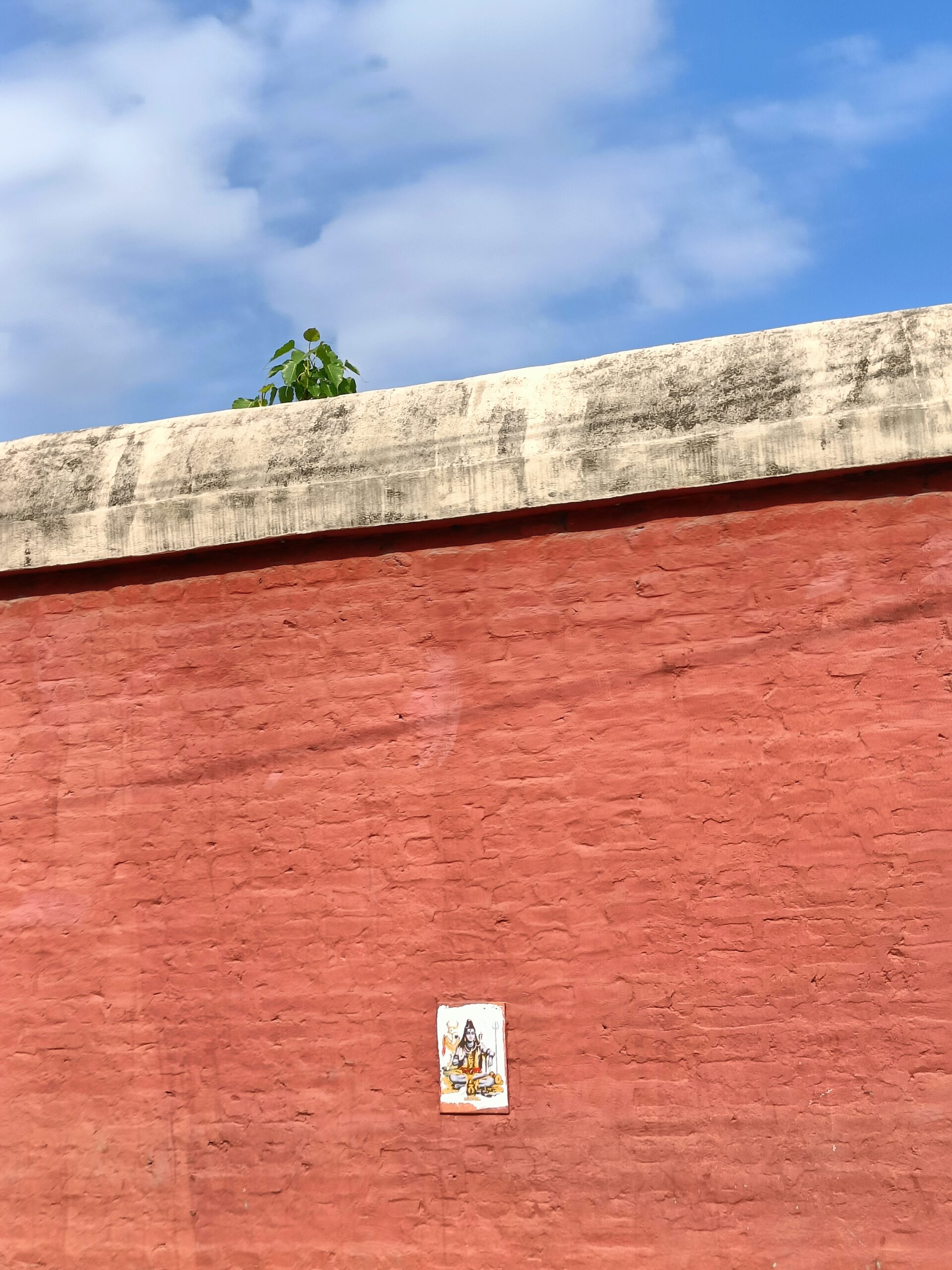
But there is softness still, to be found in this city. There aren’t many parks or gardens, but there are nature lovers in every lived room and house. Beauty can be found in the smallest of spaces. Tenderness blooms in the tiniest of rooms and from the thinnest of window sills. Leaves of resistance against the rigidity poke out of the fenced walls, cracks in the concrete and even the prison-like barred windows.
The walls of Uttar Dhoka that fell during the 2015 earthquake now have little greens poking out of them. The wall outside the Department of Passport, probably one of the most crowded buildings in Kathmandu, has little peepal leaves sprouting out from them, as if to remind people that Kathmandu is not all hard walls and bureaucracy. Or at least it’s not supposed to be.
People have found ways to protect life, protect nature in their own little ways. On almost every rooftop, balcony and windows facing the sun, and even in the alleys that never see the light of the day, one can find small potted plants. Some people huddle all the gamalas into that small sunny spot, while others secure their small pots onto railings to protect them against extreme weathers. These miniscule encounters with nature are abundant in the capital city but they are always, always in competition with the louder and bigger construction work at every corner.
These quiet devotions are odes to our viridescent inclination. It’s difficult to keep a plant alive, especially in a city smothered in pollution. Every leaf, every speck on every leaf, is a language barrier that the gardener overcomes with faith and dedication. Our reverence to keep a plant alive and growing must be taken as a sign that there’s something in the public spaces of the city or lack thereof that simply doesn’t nurture the soul. The budding mini gardens are proof that people are spending time with these plants. They aren’t abandoned life but those that have been cared for.
In a quickly hardening city like Kathmandu, what does it mean to own a flowerpot? What does it mean to hold within our bosoms a short quick tale of connection with a plant that knows tameness but also remembers what it means to be wild?
It is a small act of rebellion to house and care for these little green lives with no bigger dreams than to simply breathe and be. In a city that demands its residents to be busy and to have no spare time to simply stand and woolgather, it is a resistance to make time and space for these tiny green things.
Perhaps these plants, without much quantifiable utility aside from the beauty and tenderness they bring to one’s life and relationships, mirrors the residents’ desires for Kathmandu, their city. Henri Lefebvre imagined cities to be a co-created space, a place for life detached from the growing effects of commodification and capitalism on social interaction. One has to wonder what kind of quotidian interactions with nature we’d have if Kathmandu wasn’t so concrete heavy. Would we know the names of birds and butterflies more intimately? Would city dwellers make more time to climb trees? Would we do these activities together?
Lefebvre deemed us, the citizens, to be the protagonists of the city. Looking at the way new walls are built every day in Kathmandu, one cannot help but wonder if we’ve forgotten this city belongs to us.
Perhaps these smaller, mostly ignorable greeneries are glaring symbols of the city dwellers’ mostly forgotten right to space. Perhaps they are reminders to pause and simply be. So the next time you walk this city, pay closer attention to the quiet uprising around us.